Skip to content
No results
  • Home
  • Articles
  • About
  • Contact
American Labels logo
  • Home
  • Articles
  • About
  • Contact
American Labels logo
  • Finishes & Durability

Can You Write on Your Product Labels? Coatings and Pen Compatibility
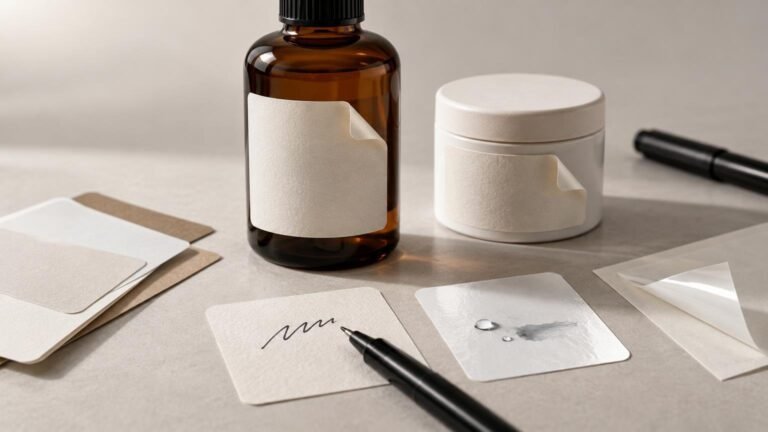
Studio close-up of amber and white cosmetic containers with blank textured labels, loose label samples, a black pen, and a glossy label sheet with water droplets.

A matte appearance does not automatically make a product label writable. Pen performance depends on the face stock, coating, printed ink, laminate and conditions of use.
  • American Labels
  • November 24, 2026
  • Materials & Adhesives

How Label Adhesive Behaves Differently on Glass, Plastic, Metal, and Cardboard

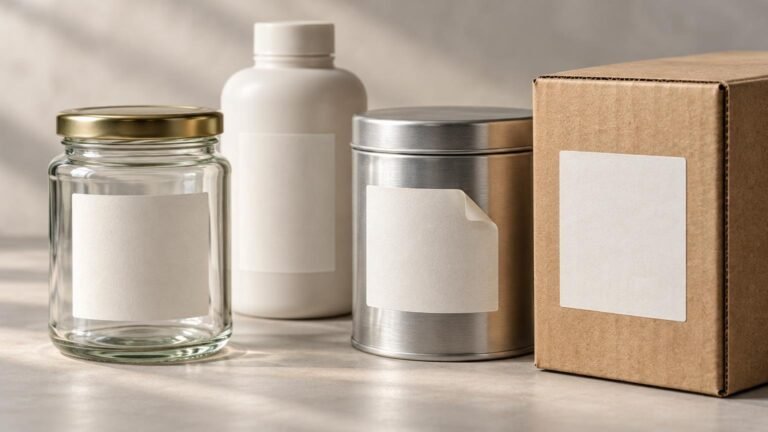
Studio still life of a glass jar, white plastic bottle, brushed metal tin with a partially lifted paper label, and corrugated cardboard box, each with a blank white label.

Glass and bare metal are generally easier to label than low-surface-energy plastics or rough cardboard, but coatings, contamination, shape and application conditions can change the result.
  • American Labels
  • November 17, 2026
  • 1 Comment
  • Materials & Adhesives

Removable, Repositionable, and Permanent Label Adhesives: What Changes?

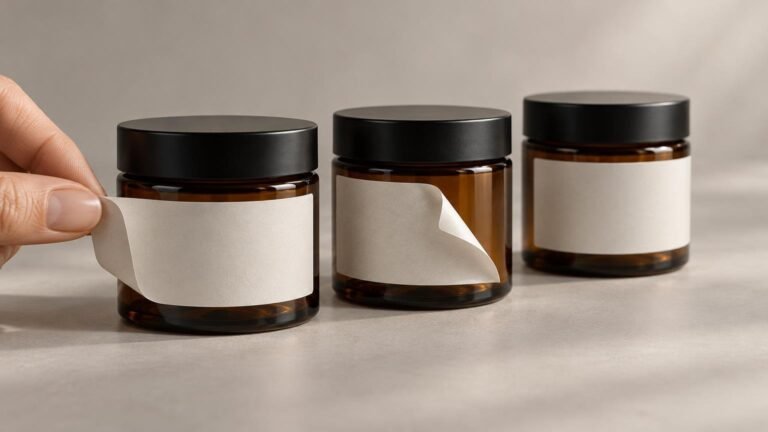
Three amber glass jars with black lids and blank white labels on a neutral studio surface; a hand peels one label from the front jar while another label lifts at the corner.

Removable, repositionable and permanent describe intended adhesive behavior, but the complete label construction, package surface and conditions determine the actual result.
  • American Labels
  • November 10, 2026
  • Sizing & Application

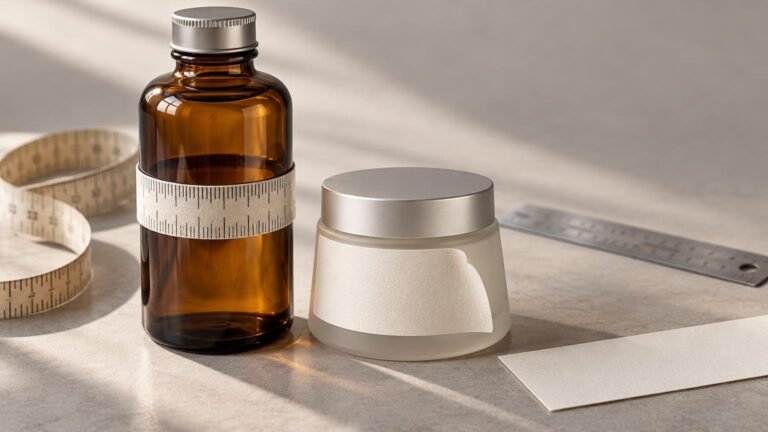
How to Measure a Container for the Right Label Size

Amber glass bottle wrapped with a measuring tape beside a tapered cosmetic jar with a partially applied blank paper label, ruler, and label sheet on a softly lit studio surface.

A practical container-first method for choosing label dimensions, including wrap coverage, tapered shapes, mockups and application checks.
  • American Labels
  • November 3, 2026
  • Packaging Applications

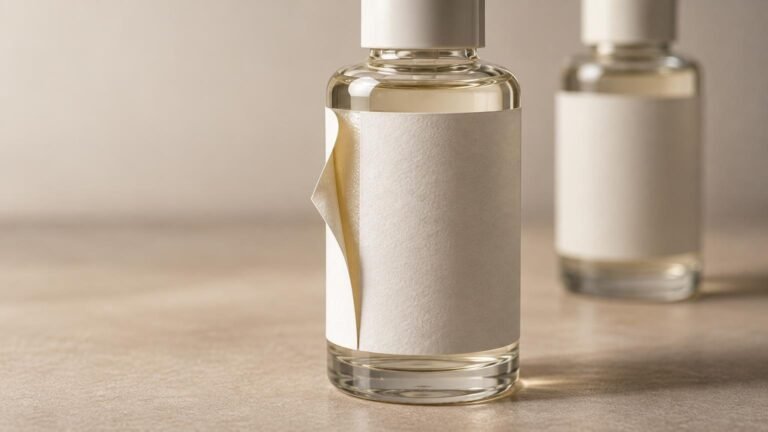
Why Labels Lift on Small Bottles: Understanding Flagging

Close-up studio photograph of a clear small bottle with a plain textured paper label peeling outward along one vertical edge, with a second blurred bottle in the background.

Label flagging on small bottles is often a geometry and construction problem, not simply weak adhesive. Diagnose the container, finished label and application process before changing materials.
  • American Labels
  • October 27, 2026
  • 2 Comments
  • Packaging Applications

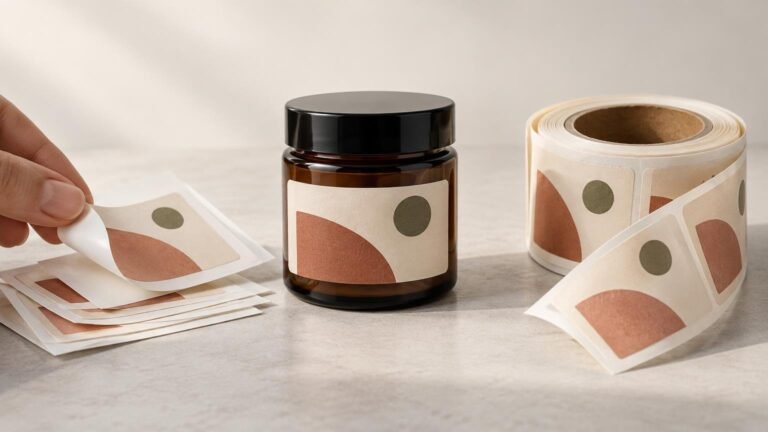
Individual Stickers vs Roll Labels for Your First Product Run

A hand lifts an individual square label from a small stack beside an amber glass jar with a matching label, while a large roll of the same labels stands on the right.

Individual stickers suit small, varied, hand-applied launches. Roll labels become more useful when repeated application speed and dispensing justify the format.
  • American Labels
  • October 23, 2026
  • Packaging Applications

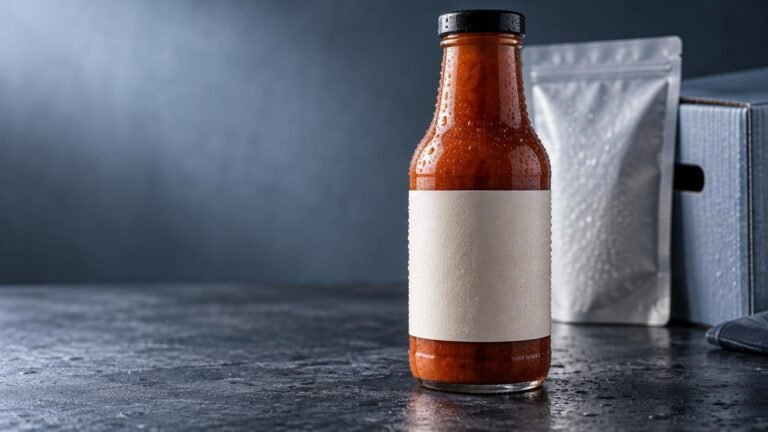
Labels for Refrigerated and Frozen Products: What Actually Matters?

Condensation-covered glass sauce bottle with a blank textured white label, standing beside frosted food pouches and a metal container on a wet dark surface.

A practical guide to specifying cold-storage labels based on application temperature, storage conditions, package material, moisture exposure and printing needs.
  • American Labels
  • October 20, 2026
  • Production & Ordering

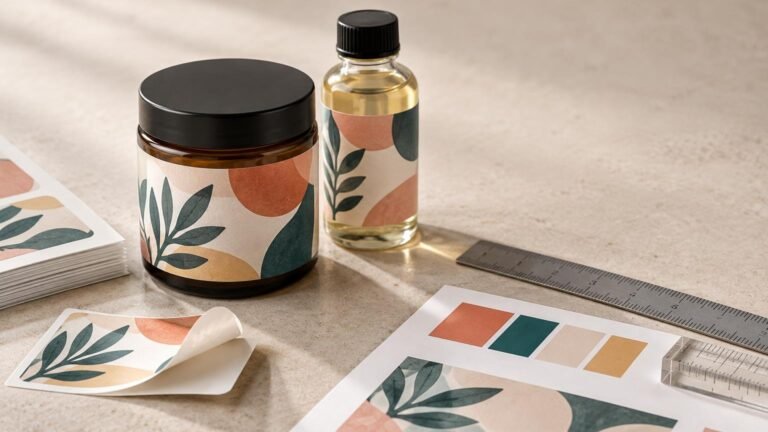
How to Order a Small Batch of Full-Color Product Labels

Studio still life of two glass product containers with botanical-pattern labels, loose label sheets, a curled adhesive label, color swatches, and metal and clear rulers on a textured work surface.

A container-first checklist for ordering a short run of full-color product labels, from measuring the label panel to approving a proof and preserving reorder details.
  • American Labels
  • October 16, 2026
  • 1 Comment
  • Packaging Applications

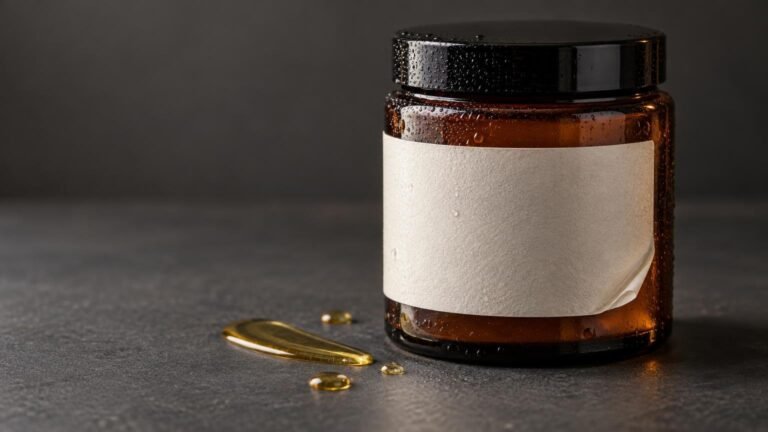
How Moisture, Oil, and Condensation Affect Product Labels

Close-up studio photograph of an amber glass jar with a black lid, covered in condensation, with a blank white paper label peeling at one lower corner and droplets of golden oil on the dark surface beside it.

Moisture, condensation, oil, and grease can weaken adhesion, damage print, or change a label’s appearance. Learn how to specify and test the complete label system.
  • American Labels
  • October 13, 2026
  • 3 Comments
  • Sizing & Application

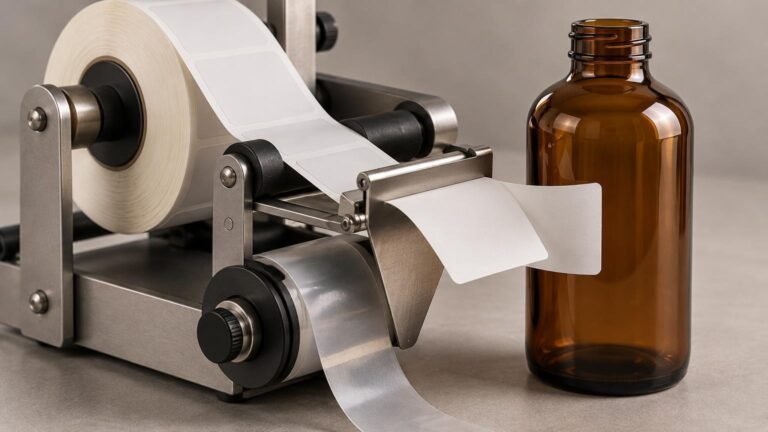
How Roll Direction Affects Label Dispensers and Automatic Applicators

Close-up studio photograph of a tabletop label dispenser feeding blank white labels from a large roll over metal rollers and a peel edge beside an amber glass bottle.

Roll direction controls how labels enter a dispenser or applicator, reach the peel edge, and present to the package. Use this workflow to specify the right unwind.

  • American Labels
  • October 9, 2026
  • 1 Comment
1 2
Next

Who We Are

American Labels helps packaging buyers and small brands specify labels for the products they make. Explore materials, adhesives, sizing and application with attention to the container surface, handling and desired finish.

contact@americanlabels.net

New on the Blog

  • Can You Write on Your Product Labels? Coatings and Pen Compatibility
  • How Label Adhesive Behaves Differently on Glass, Plastic, Metal, and Cardboard
  • Removable, Repositionable, and Permanent Label Adhesives: What Changes?

Get Updates

Join the American Labels list for useful guides and future site updates.

Privacy Policy

© 2026 American Labels

Information

  • About Us
  • Contact
  • Editorial Policy
  • Trust & Transparency
  • Privacy Policy
  • All Articles